
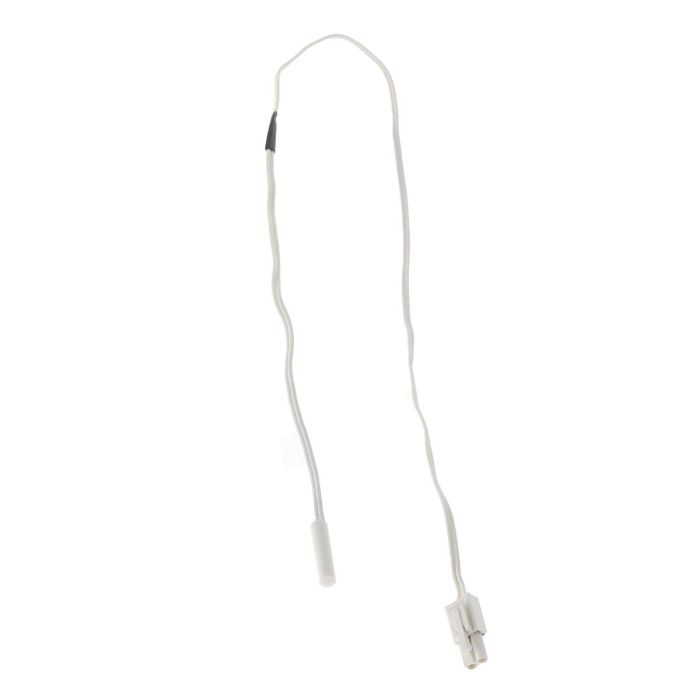
Ice Maker Sensor
Replacement ice maker sensor – compatible with Baumatic, Belling, Bush, Currys Essentials, Delonghi, Kenwood, Logik, Omega, Prestige and Sandstrom as shown unless advised otherwise
Description
A compatible replacement ice maker sensor designed to restore the ice production function on a range of fridge-freezers.
The ice maker sensor monitors the ice mould temperature and detects when the ice storage bin is full, signalling the control board to start or stop the ice-making cycle. When the sensor fails, the appliance may stop producing ice entirely, produce ice continuously and overflow, or display an error code related to the ice maker circuit. This compatible replacement is manufactured to match the original part's specifications and performance, offering a cost-effective alternative to a branded component while providing the same fit and function.
This sensor is only known to fit the models shown or as advised and will not fit any others because even if it looks the same, it probably won't be. Several may look alike but not be compatible; please take time to confirm this is correct before ordering. If you are unsure, please don't hesitate to contact us and ask for assistance.
Ice maker sensors commonly fail through moisture ingress, resistance drift over time, or physical damage to the sensor probe or lead. A failed sensor can cause the ice maker to freeze up completely, produce misshapen or clumped ice, or stop working altogether. Because several components in the ice maker system can produce similar symptoms—including the water inlet valve, the ice maker module itself, and the control board—test and confirm the sensor as the faulty component before ordering a replacement. This compatible replacement matches the original part's specifications and performance.
 Technical Notes
Specifications: Genuine ice maker sensor. Part type: NTC thermistor or ice detection sensor (model-specific). Connector type: multi-pin plug. Product code: 502403010018.
Safety note: Always disconnect the appliance from the mains supply and turn off the water inlet before beginning any work. Allow the appliance to reach room temperature before fitting the new sensor, as cold components are more brittle. Wear gloves when handling the old sensor, as edges may be sharp and the probe may be coated with ice or food debris. Handle the sensor lead carefully, as the internal element is delicate. Do not use the appliance if you smell gas or burning at any point during or after the repair.
Fitment guidance: This sensor fits only the models listed in the compatibility matrix below. The raw data provided does not include a complete model list for all brands shown. If your model is not listed, contact our parts advisors with your full model number to confirm fitment before ordering. Model numbers can be found on the rating plate inside the refrigerator compartment or on the rear of the appliance.
BAUMATIC FRIDGE FREEZER
TBC – Please check your model number with our team to confirm fitment.
BELLING FRIDGE FREEZER
BAFF515SS
BUSH FRIDGE FREEZER
TBC – Please check your model number with our team to confirm fitment.
CURRYS ESSENTIALS FRIDGE FREEZER
TBC – Please check your model number with our team to confirm fitment.
DELONGHI FRIDGE FREEZER
TBC – Please check your model number with our team to confirm fitment.
KENWOOD FRIDGE FREEZER
TBC – Please check your model number with our team to confirm fitment.
LOGIK FRIDGE FREEZER
TBC – Please check your model number with our team to confirm fitment.
OMEGA FRIDGE FREEZER
TBC – Please check your model number with our team to confirm fitment.
PRESTIGE FRIDGE FREEZER
TBC – Please check your model number with our team to confirm fitment.
SANDSTROM FRIDGE FREEZER
TBC – Please check your model number with our team to confirm fitment.

Get Expert Appliance Spare Part Help
Can't find your model number listed or need help identifying the correct part? Contact our parts advisors with your full model and serial number, and we'll verify the correct part for your appliance.
| Further Description |
Common Faults & SymptomsThe following symptoms are commonly reported when this part begins to fail. Use this as a diagnostic guide before ordering a replacement — if more than one of these is present, the part is the likely culprit. 1
Ice Maker Not Producing Ice at All
The most common symptom of a failed ice maker sensor. The ice maker cycles but no ice is produced, or the cycle does not start at all. The sensor may be reading the mould temperature incorrectly, causing the control board to believe the ice is not ready to be released. Check that the water supply is turned on and that the ice maker module is receiving power before concluding the sensor has failed.
2
Ice Maker Producing Ice Continuously or Overflowing
The ice maker does not stop producing ice, leading to an overflowing bin or ice building up around the mould. This happens when the sensor fails to detect that the bin is full or that the ice has been released. The control board continues to run the ice-making cycle because it is not receiving the correct signal from the sensor. Disconnect the appliance and check the sensor and its wiring before using the ice maker again.
3
Ice Cubes Misshapen, Clumped or Too Large
Ice cubes come out irregular in size, fused together, or larger than normal. This is often a sign that the sensor is reading the mould temperature incorrectly, causing the ice maker to release the ice before it has fully formed or to leave it in the mould for too long. Check the sensor probe for ice buildup or damage before assuming a more serious fault.
4
Error Code Related to Ice Maker Circuit
Many modern fridge freezers display a specific error code when the ice maker sensor or its circuit has failed. The code may indicate an open circuit, a short circuit, or a sensor reading outside the expected range. Because error code formats vary between brands, consult your appliance manual to identify the exact code and its meaning before ordering a replacement sensor.
5
Ice Maker Freezing Up or Frost Buildup Around the Mould
Excessive frost or ice accumulates around the ice maker mould and sensor probe. This can be caused by a sensor that is reading the temperature incorrectly, allowing the mould to become too cold, or by moisture entering the sensor connector and freezing. Defrost the ice maker fully and inspect the sensor and its connector for signs of moisture or damage before ordering a replacement.
6
Ice Maker Stopping Mid-Cycle
The ice maker begins its cycle but stops partway through, leaving water in the mould or ice partially formed. This can happen when the sensor provides an intermittent signal, causing the control board to abort the cycle. Check the sensor connector for loose pins or corrosion, and test the sensor lead for continuity before concluding the sensor itself has failed.
7
Ice Tastes or Smells Unusual
Ice takes on an odd taste or smell, even after cleaning the ice bin and water filter. A sensor that has been exposed to moisture or food debris can harbour bacteria or odours that transfer to the ice. Remove the sensor and inspect the probe for contamination. Clean it carefully and, if the taste persists, replace the sensor.
8
Visible Damage or Corrosion on the Sensor Probe or Connector
Inspect the sensor probe and its connector for signs of physical damage, corrosion, or moisture ingress. Look for cracked or split insulation on the lead, green or white corrosion on the terminals, and any signs of water inside the connector housing. Any of these indicate that the sensor has failed or is about to fail and should be replaced.
9
Ice Maker Working Intermittently
The ice maker works on some occasions and not others, with no obvious pattern. This can be caused by a sensor that is drifting out of calibration or has an intermittent connection. Check the sensor connector for loose pins and test the sensor resistance at a known temperature. If the reading varies significantly or falls outside the expected range, the sensor should be replaced.
10
Ice Bin Full Sensor Not Detecting Full Bin
The ice maker continues to produce ice even when the bin is full, causing ice to overflow into the freezer compartment. This can happen when the ice bin full sensor (often part of the same circuit as the ice maker sensor) fails to detect that the bin is full. Check that the bin is correctly seated and that the sensor is not obstructed by ice or food packaging before replacing the sensor.
Fitment GuidanceThis ice maker sensor is compatible only with the Baumatic, Belling, Bush, Currys Essentials, Delonghi, Kenwood, Logik, Omega, Prestige and Sandstrom models listed in the compatibility matrix above. The raw data provided does not include a complete model list for all brands shown. Even if a sensor looks visually similar, the resistance values, connector type and probe length can differ between models, so a part that appears to fit may not read correctly.
Diagnostic TipsBefore concluding that the sensor has failed, carry out these checks to rule out other causes. A multimeter is required for the electrical tests.
Installation GuideThese steps describe the general procedure for replacing an ice maker sensor. The exact sequence varies between models, so always consult the appliance manual where available.
Before Ordering, Check These First
Disclaimer: The fault codes and symptoms listed above are intended as a general guide to assist with diagnosis. They cannot be taken as a definitive diagnosis of any particular problem, and other components may produce similar symptoms. Always confirm the fault with proper testing before ordering parts. |
|---|---|
| Alternate Part Number | MID502403010018, 5045381448169, 502403010018, 11201007000779 |
| EAN Number | 11201007000779 |
| Manufacturer | Midea |
| Genuine Part | Yes |
Thermistors &
Temperature Sensors
Thermistors measure temperature by changing resistance with heat. They are widely used in washing machines, tumble dryers, dishwashers, fridges, freezers, and fridge freezers to help electronic controllers regulate temperature accurately.
About Thermistors
Thermistors change resistance with temperature. NTC (Negative Temperature Coefficient) thermistors drop in resistance as temperature rises, while PTC (Positive Temperature Coefficient) thermistors increase resistance as temperature rises. Most appliance thermistors are NTC type.
Faulty thermistors can cause electronic controls to misread temperatures, triggering errors or strange behaviour in appliances.
Common Applications
- Refrigeration: Fridge/freezer sensors often fail or are misdiagnosed. Thermistors control temperature readings and prevent random fluctuations.
- Washing Machines: Malfunctions can occur due to faulty thermistors or wiring issues.
- Tumble Dryers: Thermistors monitor heat; failure can cause incorrect drying or errors.
- Dishwashers: Less common, but can still cause temperature or cycle issues.
- Ovens & Cookers: Rare, but electronic ovens increasingly use thermistors for precise temperature control.
Ordering Thermistors
Thermistors are model-specific. Ordering the wrong one will result in an incompatible part. Always provide the model, serial number, or a photo of the part if you’re unsure.
Need Help Finding Thermistors?
Contact us with your appliance model, serial number, or a photo of the thermistor. We can identify the correct replacement and ensure it works with your washing machine, fridge, freezer, dishwasher, or tumble dryer.
Contact Support TeamUK'S Professional Appliance Spare Part Network • Established 1988
Delivery & Returns Information.
We aim to get your parts to you as fast as possible. We are transparent about lead times, stock availability, and our returns process to ensure a smooth repair.
Stock Availability
Please be aware that we show availability but do not display live stock levels online. Estimates are based on average manufacturer lead times.
Tradesman Warning
Do not arrange a tradesman until your goods have arrived and been checked. We do not cover tradesman costs due to transit delays or suitability issues.
Understanding Lead Times
Normally a UK stock item. Dispatched same or next working day. Some items may take longer depending on specific warehouse location.
Usually a UK/EU stocked item but with a longer lead time. Contact us before ordering for specific clarification if the repair is urgent.
Factory or Custom order items. These are ordered specifically for you and cannot ordinarily be returned. Please allow the full time indicated.
Order Transit
Orders placed before 3:00 PM (Mon-Fri) for in-stock items are typically dispatched same-day.
We use Royal Mail, DPD, and Evri. Tracking information is emailed upon dispatch. Delivery times to rural or offshore areas will vary.
Heavy/Oversized Items
Items such as dishracks, tubs, and glass cooktops may incur additional fees due to weight and specialised packaging requirements. We will contact you if additional shipping is required.
Returns Policy
Damages
Report transit damage within 24 hours. Include a photo of the damage and the packaging to speed up the claim process.
Cancellations
You have 14 days after delivery to cancel. This must be done via email or support ticket (not phone/chat).
Exclusions
We cannot accept returns for items that have been fitted for fault-finding, used, or custom-ordered.
How to Return an Item
Contact us with your order number and reason for return.
Wait for instructions and the correct returns address (this varies by item).
Package carefully. Do not deface original packaging. Use tracked post.
Have questions about your delivery or a potential return?
Contact Support Team98% of orders delivered on time • Expert Resolution • Established 1988